


(Note: all Guanche words and names follow the rules of Spanish pronounciation)
A few - it would appear very few - sea explorers reached the Canary Islands during ancient times. The islands lie in the Atlantic Ocean, into which very few sailors dared to venture. Furthermore, the ocean current called "Canaries Stream" flows in a southwesterly direction before veering to the west to sweep the unwary ocean vessel off to the Caribbean. Centuries later, Europeans would make use of this current as a powerful aid in crossing the Ocean to reach America. (Cristopher Columbus called in at Gran Canaria and La Gomera, and set sail from this island during his voyage of discovery in 1492. The Canaries were the last land sighted by the Spaniards before landing in the island of Guanahani -San Salvador- on October 12, 1492; and Canarian water and provisions supplied the "Pinta", the "Niña" and the "Santa María").
Those few Phoenicians, Greeks and Romans who reached the islands and
managed to return home to tell their story, surrounded the Canaries in a mist of magic and
legend. For centuries, even after the Spanish conquest, it was believed that the islands
were the uppermost peaks of the lost continent of Atlantis of which Plato wrote. Others
identified them with the Elysian Fields, home to the blessed who knew no cold or pains.
Similarly, the islands came to be identified with the Garden of Hesperydes, a paradise
where golden apples grew under the guard of a gigantic flame-spewing monster (the Teide
volcano?).
The Roman general Quintus Sertorius, whose ship was swept from Lusitania (Portugal) by a
storm, speaks in the Ist century BC of "some islands higher than Mount Atlas with a
gentle climate". Plutarch called the Canaries "the Fortunate Islands", a
nickname with they still bear and which has given rise to the term "Macaronesia"
(the Happy Islands) to refer to the archipelagos of the Azores, Canaries, Madeira, and
Cape Verde in the Atlantic.
Juba, king of Mauritania in Northern Africa and vassal of Rome in the Ist century BC, sent
an expedition out to explore the islands according to the writings of the famous
naturalist Plinius.
Europeans "re-discovered" the Fortunate islands in the first half of the XIVth century. They found living there a people who later came to be known as the Guanches, and who are still the object of great mystery.
Where did they come from? How did they reach the islands? When did they arrive?
They had to have arrived by sea, of course. And they arrived with their domesticated animals: goats, sheep, pigs and dogs. They brought with them wheat and barley. They came from North Africa, originating from the same stock as the Berbers of the Atlas mountains. Yet this simple affirmation has caused - and still causes - virtual rivers of ink to flow in polemical debate in which archeology and ethnography become entangled in politics.
According to the tales of the European conquerors, the Guanches were a "highly beautiful white race, tall, muscular, and with a great many blondes amongst their numbers" Their great height must be understood in relation to the average height of Europeans at that time. As for the presence of blondes, even today after many centuries of invasions and intermarriage, a heritage of blond hair and blue eyes is easily found among modern day Berbers of the Atlas region in Africa. There have of course been those who have tried to deny the Berber origins of the Guanches for political reasons, perhaps in order to avoid the possibility of potential territorial claims on the part of Morocco. But this reasoning is totally illogical. The ancestors of the current Moroccan and Algerian Berbers who emigrated to the Canaries did so several centuries before the birth of Christ when neither Morocco nor Algeria nor their cultures yet existed. According to the same line of argument, the Italians of Rome would have a stronger claim to the cities of Northern Africa which were founded by the Roman Empire!
The ancestors of the Guanches arrived by sea, colonized the islands... and then "forgot" how to sail! When the Europeans landed on the Canaries, they discovered a stone age culture based on shepherding, fruit gathering and a very limited agriculture. This same base was common to all the islands, but each island had developed into its own microcosm to the point where even the language had differentiated into distinct dialects. The islands were cut off one from the other as the natives did not know the art of navigation. They fished only in coastal tidal pools.
This is one of the great enigmas of the Guanches. How was it possible
for a race of people to reach the shores of these tiny islands by sea, live surrounded by
ocean with - on several islands - enormous forests of tall trees for raw material and yet
ignore the sea, living as it were with their back turned to it? Several possible answers
to this mystery have been offered. Perhaps the people of the Canaries were simple
shepherds who had been transported to the islands by a sailing people and later forgotten
and left to fate. Other explanations might be found in the extraordinary difficulty of
navigating the oceans surrounding the Canaries due to the strong currents flowing to the
West and the trade winds blowing as strongly almost year round.
Guanche was the name by which the natives of Tenerife called themselves. Guan Chenech meant "Man from Chenech", or man from Tenerife. With the passage of time, the term Guanche became identified with all the native peoples of the Canaries.
The names of the different islands and of their inhabitants (for those that are known) are as follows:
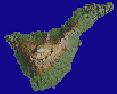
TENERIFE: Chenech, Chinech or Achinech. It would seem that the natives of La
Palma, seeing the snow-covered peak of the Teide on the horizon, called that island Ten-er-efez,
"White Mountain" (from Ten, teno, dun, duna= mountain, and er-efez= white). Achenech
was inhabited by the Guan Chenech, the men from Chenech.
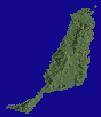
FUERTEVENTURA: Maxorata, inhabited by the Majoreros or Maxos.

GRAN CANARIA: Tamaran, also called Canaria, was inhabited by the Canarii.

LANZAROTE: Tyteroygatra.

LA PALMA: Benahoare, pronounced "Ben-Ajuar", and meaning "from the
tribe of Ahoare" (tribe of the African Atlas). Island inhabited by the Auaritas.

LA GOMERA: Gomera, inhabited by the Gomeros.

EL HIERRO: Hero, inhabited by the Bimbaches.
 THE GUANCHE
WAY OF LIFETHE GUANCHES
AND DEATHWHAT BECAME OF THE
GUANCHES?
THE GUANCHE
WAY OF LIFETHE GUANCHES
AND DEATHWHAT BECAME OF THE
GUANCHES?
Bibliography:
Las culturas aborígenes canarias (A.Tejera y R. González Antón); La religión de los
Guanches (A. Tejera); Lenguaje de los antiguos isleños (J.A. Alvarez Rixo); Los Guanches
(L. Diego Cuscoy); Historia de Canarias / Los Aborígenes (M.C. del Arco, J.F. Navarro);
Historia de Canarias / Conquista y Colonización (Varios autores); Ritos y leyendas
Guanches (S. Martín); Natura y Cultura de las Islas Canarias (Varios autores); la Mujer
en la sociedad indígena de Canarias (F. Pérez Saavedra)